








For many food manufacturers, Electronic Data Interchange (EDI) is viewed as a retailer requirement rather than a strategic advantage. It keeps orders flowing, invoices moving and compliance boxes ticked.
But that's an increasingly outdated way of looking at it.
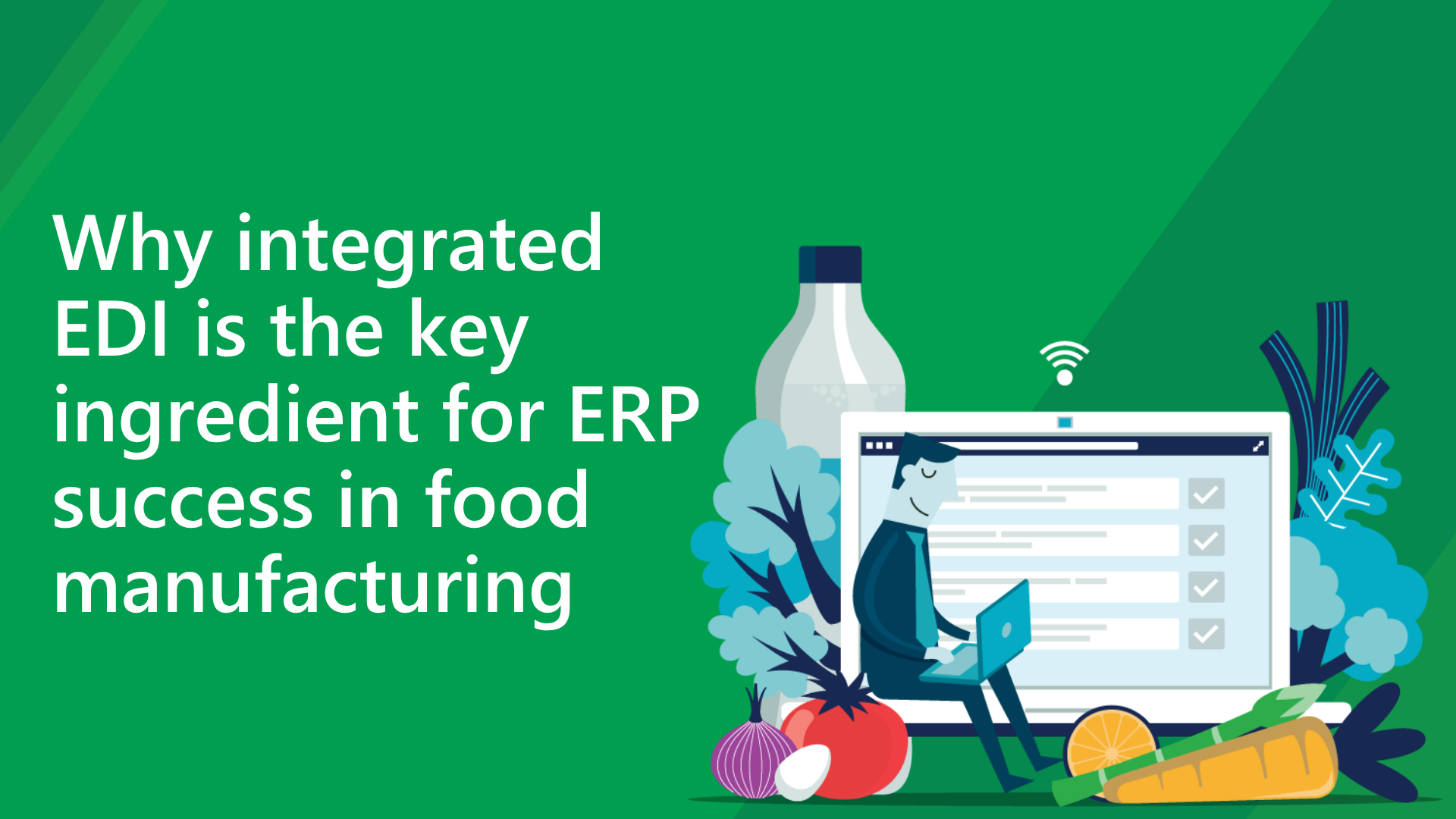
As UK food manufacturers face rising cost pressures, ongoing labour shortages, tighter retailer expectations and increasingly complex supply chains, the businesses seeing the greatest return from their ERP investment are those that fully integrate EDI into their core operations. Rather than treating EDI as a bolt-on system, they're making it part of a connected, automated supply chain powered by ERP.
This means faster order processing, fewer errors, better visibility and a more resilient business.
The UK food and drink manufacturing sector contributes more than £39 billion to the UK economy and employs approximately 444,000 people. At the same time, manufacturers continue to report labour shortages and increasing operational costs, creating pressure to do more with the resources they already have.
Food manufacturers also operate in one of the most demanding supply chain environments:
In this environment, disconnected systems create delays and unnecessary administration. Integrated EDI eliminates manual hand-offs between retailers, suppliers, warehousing, logistics and finance teams by allowing information to flow directly through your ERP system. Integrated EDI helps food manufacturers achieve five important goals:
Retailers expect suppliers to be agile.
When EDI messages are integrated directly into ERP, purchase orders can automatically trigger planning, allocation, picking and fulfilment processes without manual intervention. Rather than downloading orders, re-keying information or validating data across multiple systems, the process starts immediately.
This is particularly important in food manufacturing where delivery windows are tight and freshness matters – just like it did for one UK-based poultry supplier, where integrated EDI enabled them to process and dispatch late retailer orders on the same day.
In a sector where service levels can influence future contract opportunities, responsiveness can quickly become a competitive advantage.
Every manual touchpoint between receiving an order and receiving payment introduces risk.
When orders, advanced shipping notices (ASNs), invoices and other trading documents flow automatically between trading partners and ERP, businesses reduce opportunities for errors, disputes and delays.
Integrated EDI helps ensure orders are processed accurately and that shipping information is communicated automatically. It also helps match invoices to retailer requirements and makes it easier to maintain audit trails throughout the process.
The outcome is a smoother order-to-cash cycle and faster access to revenue.
Food manufacturers continue to face recruitment and retention challenges. Recent industry surveys show vacancy rates in food manufacturing remain significantly higher than the UK average.
Against that backdrop, every hour spent manually entering orders or correcting data errors becomes more valuable.
Integrated EDI removes repetitive administration by automating the exchange of business documents and eliminating duplicate data entry. Rather than spending time managing transactions, teams can focus on activities that drive growth, customer service and operational improvement.
In many businesses, the biggest return on EDI isn't simply reduced paperwork. It's enabling skilled employees to spend their time on higher-value work.
The Food & Drink Federation's latest Future Factory report identifies supply chain collaboration, automation and digital transformation as key priorities for improving productivity across the sector. However, many organisations still struggle with integrating innovative solutions into existing systems.
Integrated EDI helps bridge that gap.
When retailer orders, supplier communications, inventory information and logistics events flow through a single ERP platform, decision-makers gain greater visibility of:
Instead of reacting to problems after they occur, businesses can identify issues earlier and make informed decisions faster.
The cost benefits of EDI have been recognised for years, but the value increases significantly when EDI is integrated with ERP.
Eliminating paper-based transactions, reducing manual data entry errors, improving transaction speed and lowering operational overheads all contribute towards notable cost savings for food manufacturers.
And beyond immediate savings, integrated EDI creates a scalable foundation for growth. As volumes increase, businesses can process significantly more transactions without proportionally increasing headcount or administrative overhead.
An ERP implementation should do more than improve internal processes. It should strengthen the connections between your business, your customers and your suppliers.
For food manufacturers working with major retailers, EDI already plays a critical role in daily operations. The question isn't whether you need EDI. It's whether it's fully integrated with the systems your business relies on.
When EDI becomes part of your ERP strategy, rather than a separate process – like it does when you invest in Dynamics Food – the benefits extend far beyond compliance. You gain faster fulfilment, better visibility, greater efficiency and a more resilient business that's ready for future growth.
The most successful food manufacturers aren't just digitising transactions. They're creating connected supply chains where data moves seamlessly from retailer to warehouse to finance team, all through a single ERP platform.
If you’re considering a new ERP system for your food business, we’ve helped manufacturers and distributors in the food sector drive efficiency and cut costs. Find out more about Dynamics Food, with EDI built in.